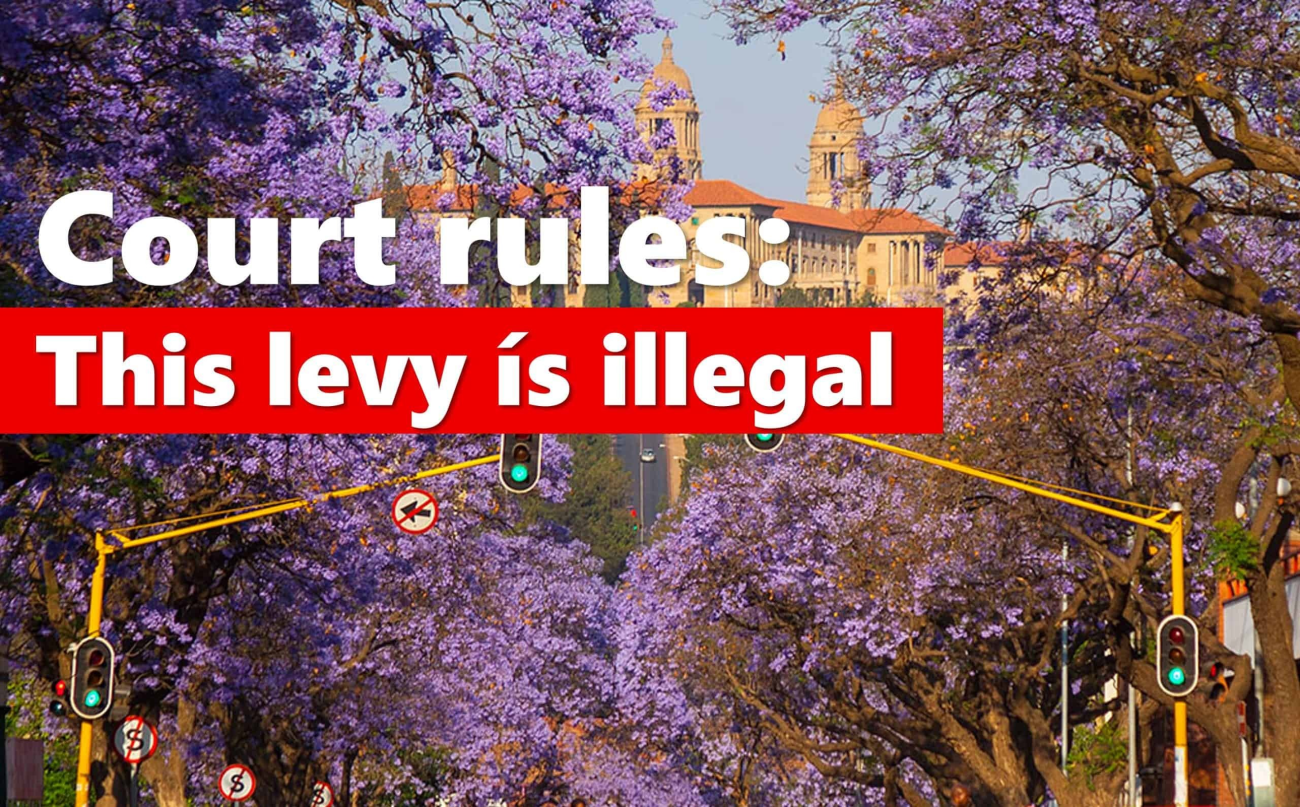
In a major legal victory for property owners and residents, the Gauteng High Court has declared the City of Tshwane’s R194 monthly cleaning levy unlawful. The ruling affects nearly 250,000 households and businesses that were billed for refuse removal services they did not receive—many of whom rely on private waste contractors.
The court ordered the city to credit affected accounts and cover the legal costs of AfriForum, the applicant in the case. This decision not only relieves residents of unfair charges but also exposes serious flaws in municipal billing practices.
⚖️ What Was the Issue?
The cleaning levy was introduced to fund “system-wide public cleansing,” including street sweeping, landfill rehabilitation, and enforcement against illegal dumping. However, AfriForum argued that:
- Many residents already pay private contractors for waste removal.
- The city’s tariff schedule and landfill fees already cover these services.
- The levy was a backdoor attempt to plug a R540 million budget shortfall.
The court agreed, criticizing the city for misleading the judiciary and failing to produce a valid by-law to justify the charge.
🏘️ Impact on Property Owners
This ruling sets a precedent for how municipalities structure service-related charges. It reinforces the principle that fees must reflect actual service usage, not blanket taxation based on assumptions.
For property owners, especially those in complexes or using private waste services, this means:
- Greater transparency in municipal billing
- Legal protection against unjustified levies
- Potential refunds or credits for past charges
🔍 Broader Implications
The Tshwane case echoes similar concerns in Cape Town, where the South African Property Owners Association (SAPOA) is challenging cleaning levies and other fixed charges. Both cases highlight the growing tension between municipalities seeking revenue and residents demanding fairness.
📸 Image Source: (Image credit: AfriForum)